Holes in Your Tree Trunk: When It’s a Woodpecker and When It’s Worse
As spring starts to creep in and leaves begin to bloom, you may find yourself admiring the trees on your property. With sweeping branches and vibrant leaves, they’re a sight to see—but wait, is that a hole in the trunk?
If you spot a hole in a tree trunk, don’t panic. Plenty of woodpeckers burrow into trees for food and shelter. However, that doesn’t mean you’re in the clear. Unexplained holes in your trees could also be signs of disease or pests. If you suspect your tree may have an infection or infestation, call a professional arborist for an assessment. Untreated infections and infestations can spread across your entire landscape.
Signs of Woodpeckers
Woodpeckers make two types of holes in trees: feeding holes and nesting holes. Nesting holes will typically be barely larger than the bird making them, but feeding holes vary in appearance depending on the woodpecker species.
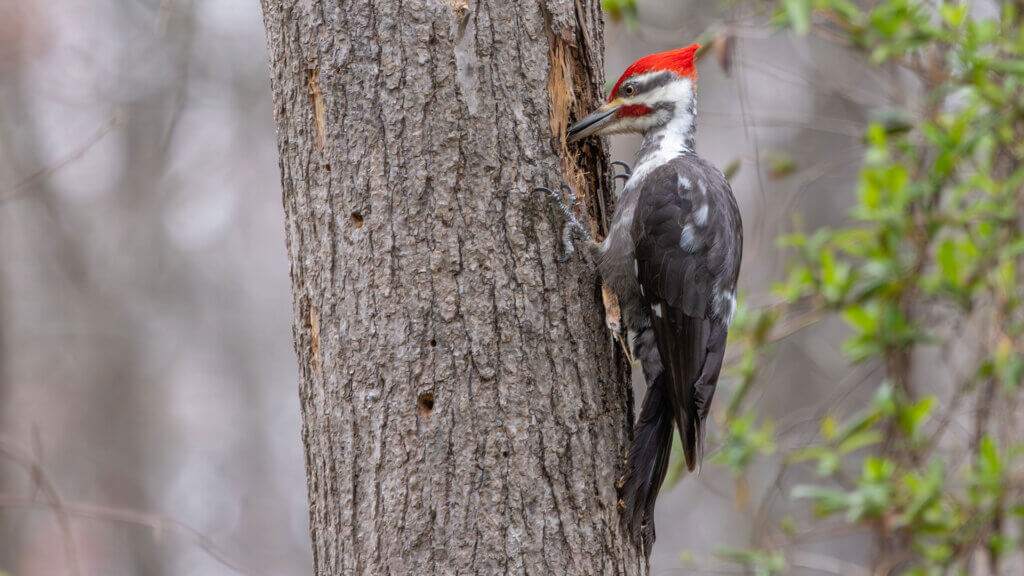
Pileated woodpeckers are the archetypal woodpeckers, sharing some characteristics with Woody the Woodpecker. They’re larger than most woodpecker species, and their feeding holes reflect that. Pileated woodpecker feeding holes are rectangular and can exceed a foot in length. Trees where they forage will often have piles of sawdust-like wood shavings at their bases.
Hairy woodpeckers are smaller with white bellies, black and white stripes, and red patches on the backs of their heads. They hunt by tearing off bark and making half-inch wide holes, often weaving back and forth. If you notice small patches of bark missing, small holes, and a wavy pattern, you probably have hairy woodpeckers.
Yellow-bellied sap suckers are small birds with brown-yellow bellies, black-and-white stripes, and red chins and foreheads. These woodpeckers make holes in distinct rings around tree trunks. The holes they make are remarkably small, like thick needle punctures.
Woodpeckers aren’t typically harmful to trees. In fact, their nests and feeding holes are essential resources to other local wildlife.
Signs of Tree Disease
Disease-related holes in trees are often one of many symptoms. If holes are paired with abnormalities in leaves (such as brown or black spots, a powdery buildup, or death) or fungus growing on the tree, you’re likely dealing with tree disease.
Woodpecker holes often look different than disease-related holes. Diseases can cause shedding bark with soft spots and dark streaks beneath, hollow trunks, excessively large and deep holes, interior rot, and cankers. Cankers take on a variety of appearances, from depressions in the bark to swollen lumps. They typically look gnarled, almost like open wounds, and can leak resin or sap.
Protect Your Trees
If you suspect a hole in your tree is the work of a disease rather than a woodpecker, it’s essential to contact a specialist immediately. If left untreated, the disease will likely kill the tree and can even spread to other plants.
Contact Stumpy’s Tree Service today for an expert consultation and a custom action plan. Don’t wait until it’s too late to save your trees. Call Stumpy’s.